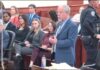
A reservist identified as the son of Israel’s ambassador to the United States was critically wounded in a West Bank car-ramming that Israeli forces say ended with the driver shot dead.
Story Snapshot
- Ambassador’s son, identified as an Israel Defense Forces reservist, is in critical condition after a checkpoint ramming.
- Israeli troops fatally shot the suspected attacker at the scene, officials said.
- The ambassador asked for prayers, saying medics were fighting to save his son’s life.
- Reports cite treatment at Shaare Zedek Medical Center in Jerusalem following emergency evacuation.
What Happened at the Checkpoint
Israeli military and police officials reported a car-ramming at a checkpoint in the central West Bank on September 23, injuring a soldier who multiple outlets identified as the son of Israel’s ambassador to the United States. The site was described as either the Maccabim checkpoint on Route 443 or within the Binyamin Brigade’s area, reflecting typical early differences in location detail across reports. Troops opened fire and killed the driver at the scene, according to initial statements carried by major outlets.
The ambassador publicly named his son and said medics were working to save his life. He asked the public for prayers, calling the situation dire and saying his son needed a miracle. Newsrooms variously spelled the son’s first and last name, a common issue in breaking stories involving Hebrew transliterations. Despite those differences, the reports aligned on the core facts: a severe injury in a ramming and emergency treatment that followed.
Who Was Injured and Where He Was Treated
Outlets identified the injured man as a reservist or soldier on duty at the checkpoint when the vehicle struck him. Several reports named him as Neria or Neriya Leiter and noted he is the son of Israel’s ambassador to the United States. Emergency crews transported him to Shaare Zedek Medical Center in Jerusalem for trauma care. One outlet reported he arrived unconscious and on a ventilator, describing a critical condition consistent with the ambassador’s plea.
Coverage from multiple organizations said the attacker died after Israeli forces fired in response to the impact. That detail, carried by wire services and regional outlets, has appeared consistent across reports since the first alerts. Officials have not released a full public dossier on the suspect, and early accounts varied on spelling and some biographical details, which often get refined as authorities finalize records.
Why This Incident Resonates Beyond the Scene
The attack struck during a high-profile diplomatic week and at a hotspot where soldiers and civilians often face danger. Researchers have found that checkpoints are frequent flashpoints because soldiers, drivers, and bystanders share tight spaces under stress, and any sudden move can escalate fast. Media studies also show that when a victim has a public link, early coverage tends to center on the person and the blow-by-blow, with broader context arriving later in the cycle.
Israeli Ambassador to US Rushes Back to Israel After Son Seriously Wounded in West Bank Terror Attack https://t.co/g1JIqTqTr1
— Bruce Weingart (@bruce_weingart) September 24, 2026
Americans watching from across the aisle see a familiar pattern. People worry that major institutions frame events to fit politics first and proof second. That frustration grows when spellings, locations, and medical terms shift as news breaks. Here, multiple credible outlets agree on the core facts of a ramming, a critically injured reservist, and a suspect shot dead. The human stakes are clear, even as precise spellings and exact coordinates continue to settle in updates.
Sources:
nypost.com, themedialine.org, washingtonpost.com, eprints.whiterose.ac.uk, ijoc.org
© libertystartribune.com 2026. All rights reserved.