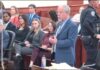
Two Iowa House hopefuls clashed on tariffs, immigration, and the Iran war in a tight, televised debate that put policy stakes ahead of slogans.
Story Snapshot
- Lindsay James and Joe Mitchell met in a one-hour Iowa PBS debate on October 8.
- Reporters pressed both on tariffs, taxes, immigration, and the Iran war.
- The race will replace Representative Ashley Hinson, who is running for Senate.
- Sharp exchanges showed how conflict can eclipse policy detail close to Election Day.
Who Debated, Where, and Why It Mattered
Iowa PBS hosted a one-hour debate for Iowa’s 2nd Congressional District on October 8. Democratic State Representative Lindsay James of Dubuque and Republican Joe Mitchell of Clear Lake were the only participants. Iowa Press moderator Kay Henderson led the questioning with Iowa reporters. The event focused on what each would do in Congress for jobs, trade, and security. The debate aired statewide and offered voters a side-by-side look at two very different paths for the district.
The seat is open because Representative Ashley Hinson is running for the United States Senate. That raised the stakes for both campaigns as they seek to define the district’s future voice in Washington. Local coverage highlighted the focus on Social Security, artificial intelligence, and schools, along with trade and taxes. That mix reflected kitchen-table concerns shared by many voters who feel national leaders talk past them and dodge basic costs-of-living issues.
Tariffs, Taxes, and Trade Took Center Stage
Reporters pressed the candidates on tariffs and taxes, and how those policies hit Iowa families. Coverage noted exchanges over whether tariffs help local steel and agriculture or raise prices for consumers and small firms. Both candidates linked trade to jobs and wages in the district. They also weighed how to balance revenue, deficits, and investment. Their answers showed a clear policy divide but a shared claim to protect Iowa’s producers and workers in a choppy global market.
Both candidates endorsed a planned steel plant as a local jobs driver, while still disagreeing on the best national trade posture. That created a useful contrast for voters. One path leaned into targeted protection to boost domestic industry. The other warned about pass-through costs on consumers and farm inputs. Viewers heard familiar arguments many blame Washington for missing: price spikes, supply chain shocks, and uncertainty for small businesses trying to plan beyond the next quarter.
Immigration, Security, and the Iran War Framed the Stakes
Questions on immigration and the Iran war brought national security into the local race. The candidates sparred over border enforcement and how to handle unauthorized crossings. They tied those issues to drugs, labor markets, and strain on local services. On foreign policy, they split on the scope and timing of United States involvement in the Iran war, stressing the costs, risks to troops, and energy price effects that hit Iowa families at the pump and in utility bills.
Viewers also heard about data centers, artificial intelligence rules, and term limits. Those topics linked big-technology growth to land use, power demand, and privacy concerns in the district. The exchange reflected a broader anger from both right and left at federal systems that feel captured by well-connected interests. Many voters say Washington protects the powerful first. The candidates tried to show how they would guard local control and basic fairness in those fast-changing sectors.
Debate Heat vs. Policy Light Near Election Day
This second debate followed an earlier face-off marked by sharper personal shots and quick-hit moments. Political research shows why: personal attacks draw outsized media attention as elections near, even when they do not move votes or improve governing results. That dynamic can crowd out policy depth in post-debate coverage. Voters then see the conflict, but not always the cost or trade-offs behind each plan.
Tonight, our 2nd Congressional District debate between Candidates Lindsay James (D-Dubuque) and Joe Mitchell (R-Clear Lake) will broadcast statewide on Iowa PBS & stream starting at 7pm. https://t.co/bQ8JOP3Vlq
— Iowa Press (@IowaPress) October 8, 2026
For citizens who feel the system serves insiders, this pattern adds to the distrust. They want clear answers on prices, wages, and safety, not highlight reels. Yet debates remain one of the few times candidates face the same questions under the same lights. That makes events like Iowa PBS’s forum valuable. Voters got direct contrasts on tariffs, immigration, and war-and-peace choices. The outcome now turns on which vision feels more grounded in real life at the checkout line.
Sources:
thegatewaypundit.com, desmoinesregister.com, iowapbs.org, kcrg.com, iowacapitaldispatch.com, pbs.org, thegazette.com, kttc.com, radioiowa.com
© libertystartribune.com 2026. All rights reserved.