
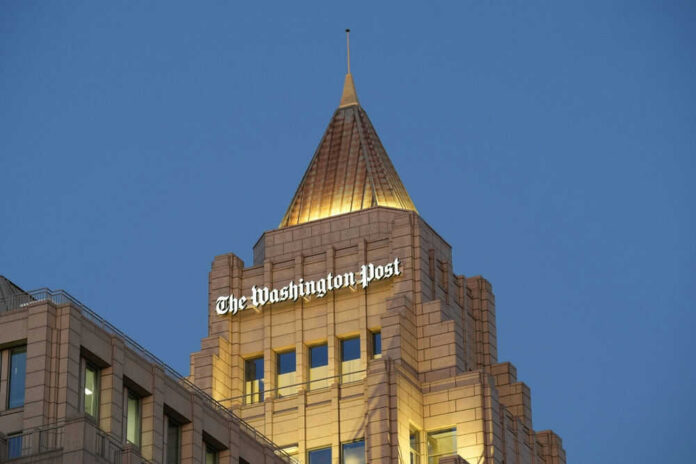
(LibertystarTribune.com) – The Washington Post just gutted one-third of its workforce in a self-inflicted crisis triggered by years of leftist bias, financial hemorrhaging, and ownership decisions that chased away hundreds of thousands of readers—raising serious questions about whether legacy media can survive the consequences of abandoning balanced journalism.
Story Highlights
- The Washington Post eliminated approximately 300 journalists, dissolving entire departments including sports, books, and Middle East coverage in February 2026
- The paper lost 250,000 subscribers within days of refusing to endorse a presidential candidate in October 2024, accelerating a financial crisis that cost $177 million over two years
- Owner Jeff Bezos shifted the editorial board toward “personal liberties and free markets” while hiring conservative writers, alienating the paper’s liberal base without winning conservative trust
- CEO William Lewis resigned immediately after implementing the devastating cuts, leaving the Post’s future uncertain amid broader journalism industry collapse
Legacy Media’s Self-Destruction Unfolds
The Washington Post announced massive layoffs in early February 2026, eliminating roughly 30 percent of its staff including over 300 newsroom journalists. The cuts dissolved the sports desk entirely, eliminated the books section, gutted the metro coverage, and fired all Middle East correspondents. Daily podcasts were suspended. This represented one of the most dramatic restructurings in the publication’s 145-year history, directly contradicting previous management assurances that editorial staff would remain protected. Executive Editor Matt Murray framed the devastation as necessary restructuring, claiming the cuts would “strengthen our footing” despite obvious damage to reporting capacity.
Financial Collapse Rooted in Editorial Arrogance
The Post hemorrhaged money for years, losing $75 million in 2023 and $100 million in 2024, totaling approximately $177 million in losses over two years under Jeff Bezos’s ownership. The financial crisis exploded in October 2024 when CEO William Lewis announced the paper would stop endorsing presidential candidates. That decision—likely aimed at appearing more balanced—backfired spectacularly when 250,000 subscribers canceled within five days. The subscriber exodus exposed a fundamental problem: the Post had cultivated an audience expecting partisan validation rather than objective journalism, and that audience punished any deviation from orthodoxy.
Bezos’s Strategic Pivot Fails to Stop Bleeding
Bezos acquired the Post in 2013 with promises of innovation and stability, but his recent actions suggest desperation rather than vision. In February 2025, he announced the editorial board would pivot toward “personal liberties and free markets,” hiring several conservative opinion writers to signal ideological balance. The move pleased neither camp: liberal readers felt betrayed while conservatives remained skeptical of a publication notorious for years of left-wing bias. This miscalculation reflects a broader media industry problem where legacy outlets built audiences on partisan messaging and now struggle to broaden appeal. Bezos emphasized that “data tells us what is valuable,” yet the data clearly showed his strategic repositioning failed to reverse subscriber losses or financial decline.
Newsroom Capacity Gutted Across All Functions
The layoffs eliminated critical reporting infrastructure across every department. International coverage capabilities were substantially reduced, undermining the Post’s competitive positioning against other major news organizations on global events. The metro section downsizing diminished local Washington D.C. coverage, abandoning a core mission area. The complete elimination of Middle East correspondents and editors removed expertise during a period of significant regional instability. The Washington Post Guild, representing newsroom employees, warned that “continuing to eliminate workers only stands to weaken the newspaper, drive away readers and undercut The Post’s mission,” questioning whether Bezos remains willing to sustain journalism’s accountability function.
CEO William Lewis resigned immediately after announcing the cuts in early February 2026, stating it was “the right time” to step down. His departure after implementing such devastating layoffs suggests recognition that his tenure failed to solve the Post’s structural problems. Leadership instability compounds the newsroom chaos, leaving staff uncertain about future direction while competing with news organizations that maintain stronger financial footing and clearer editorial identities. The Post’s crisis exemplifies challenges facing all legacy media: declining subscriptions, reduced advertising revenue, and audience fragmentation across digital platforms where trust matters more than institutional legacy.
Broader Journalism Industry Faces Reckoning
The Post’s collapse mirrors nationwide journalism contraction, with over 3,000 journalism jobs cut in 2025 alone. This industry-wide crisis stems partly from business model disruption but also from credibility erosion after years of partisan coverage that alienated half the country. Conservative Americans watched legacy outlets abandon objectivity in favor of progressive activism, then expressed their dissatisfaction by canceling subscriptions and tuning out. The Post’s experience demonstrates that audiences punish both perceived bias and attempts to correct it if trust has already evaporated. For readers who value constitutional principles, limited government, and balanced reporting, the Post’s struggles offer a cautionary tale about institutions that prioritize ideology over journalism’s core mission of factual accountability.
Sources:
Washington Post layoffs: Jeff Bezos – Tangle
Why did the Washington Post layoffs happen? – Poynter
Copyright 2026, LibertystarTribune.com