libertystartribune.com — Within hours of Washington’s triumphant ceasefire talk, reports of renewed cross‑border fire raised the specter of yet another diplomatic promise collapsing before the ink could dry.
Story Snapshot
- President Donald Trump said Israel and Hezbollah agreed to extend a ceasefire or de-escalate for three weeks [1][2][3].
- Trump’s language suggested a provisional pause rather than a signed, enforceable pact [1][2].
- Media accounts and prior briefings highlighted ongoing skirmishes despite de-escalation messaging [3][4].
- The pattern fits announcement-driven ceasefires that outpace verification on the ground [5][6][7].
What Trump Claimed And Why It Matters
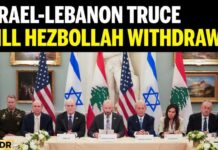
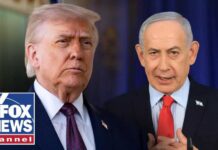
President Donald Trump told reporters that Israel and Lebanon would extend their ceasefire by three weeks, framing it as a fresh window to work toward a longer-term deal [1]. In parallel remarks and coverage, he said Israel and Hezbollah agreed to stop fighting after calls with Israeli Prime Minister Benjamin Netanyahu, presenting the development as a de-escalation milestone [2][3]. The assertion landed at a moment when the White House sought to project control over a volatile front, tying diplomacy to regional stability narratives [6][7].
Trump’s phrasing indicated a pause that built on an existing understanding, not a formal, signed bilateral agreement with explicit enforcement terms [1][2]. He referred to an “additional three weeks” and a “ceasefire… already in place,” language that leaves room for conditionality if either side resumes fire. That nuance matters because temporary deconfliction arrangements often unravel when frontline units test boundaries or respond to perceived provocations, reducing headline breakthroughs to fragile, hour-by-hour quiet [5][6].
Conflicting Signals From The Battlefield
Coverage contemporaneous with the announcement underscored that clashes and skirmishes around southern Lebanon had not fully abated, despite talk of scaling back [4][7]. Reports described continued pressure along the frontier, which complicates any claim of a comprehensive halt. Such discrepancies are not unusual in conflicts involving a state military and a nonstate armed group, where command-and-control asymmetries and local dynamics can outpace high-level statements made in capitals far from the line of contact [5].
This tension between rhetoric and reality reflects a familiar cycle. Leaders emphasize de-escalation to shape perceptions and buy time for talks, while fighters on the ground respond to immediate threats and local calculations. Media items capturing both the presidential framing and the persistent skirmishes sharpen that contrast: they validate that Washington broadcast a pause, and they indicate that verification and compliance lagged or were never fully synchronized between the parties [2][3][4].
Why Announcement-Driven Ceasefires So Often Falter
Historical patterns show that announcement-first ceasefires routinely outpace clearly defined mechanisms for monitoring, accountability, and dispute resolution. Public claims of de-escalation by the United States and Israel can deliver immediate political returns, projecting momentum and diplomatic reach, even as the underlying terms remain ambiguous or unpublicized [5][6][7]. In parallel, Hezbollah and Lebanese political actors often preserve ambiguity to avoid signaling concession, a stance that can delay matching confirmations and blur responsibility when shots are fired [5].
JUST IN: President Trump had a call with the Israeli PM, and no more troops will be going to Israel.
Hezbollah and Israel have exchanged cross-border attacks for months. A sustained halt to hostilities from all sides could help reduce tensions and create an opportunity for a… pic.twitter.com/l3FpCrvaQF
— Donald J Trump Posts TruthSocial (@TruthTrumpPost) June 1, 2026
For Americans across the spectrum who distrust Washington’s habit of declaring success before delivering results, the mixed signals reinforce a broader concern: leaders chase headlines while the facts on the ground tell a different story. Conservatives see another instance where international promises fail to deter armed adversaries. Liberals see a top-down announcement that lacks transparency and accountability. Both camps recognize that without verifiable enforcement—who monitors, what happens if violations occur—ceasefire talk can become another exercise in political optics over durable outcomes [5][6][7].
What To Watch Next
Near term, watch for synchronized statements from Jerusalem and Beirut that detail verification steps, violation criteria, and consequences—elements largely absent from the initial rollout [1][2][3]. Monitor whether reported skirmishes taper in both frequency and geographic spread; sustained reductions would signal that chain-of-command directives are taking hold. Finally, scrutinize whether outside mediators introduce clear monitoring mechanisms. If none emerge, expect renewed friction and another round of blame over who broke what, when—and why it was announced as settled in the first place [5][6][7].
Sources:
[1] Web – Trump Says Israel and Hezbollah Have Agreed to Dial Back Fighting
[2] YouTube – Trump Says Israel-Lebanon Ceasefire Extended Three Weeks
[3] YouTube – Trump says Lebanon and Israel agree to extend Israel-Hezbollah …
[4] Web – Trump says Hezbollah, Israel agree to stop fighting after call with …
[5] YouTube – Trump Convening Cabinet as Skirmishes Persist in Southern …
[6] YouTube – Trump says Israel and Hezbollah have agreed to dial back fighting
[7] Web – Trump says no Israeli troops will go to Beirut in call with Netanyahu …
© libertystartribune.com 2026. All rights reserved.