
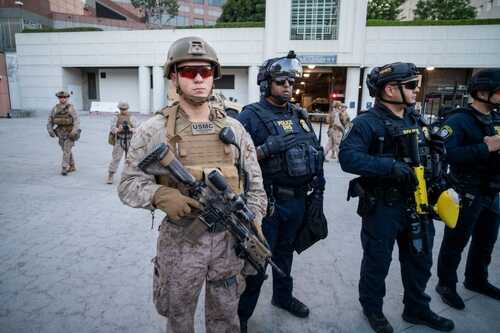
(LibertyStarTribune) – A federal crackdown in New Orleans raises questions about state cooperation and immigrant rights.
Story Snapshot
- The DHS is deploying 250 federal agents to New Orleans for “Swamp Sweep.”
- The operation aims to arrest and deport 5,000 undocumented immigrants.
- Louisiana’s cooperation with federal authorities is a key factor.
- Concerns emerge about due process and community impact.
Federal Crackdown: Operation “Swamp Sweep”
The Department of Homeland Security (DHS) has launched a significant immigration enforcement operation in New Orleans, codenamed “Swamp Sweep.” The initiative involves the deployment of approximately 250 federal border agents with the objective of arresting and deporting around 5,000 undocumented immigrants across southeast Louisiana and Mississippi. This operation marks an intensified effort under President Trump’s administration, with New Orleans chosen due to its state-level cooperation and supportive legislative framework.
Governor Jeff Landry of Louisiana has actively supported federal immigration enforcement, signing legislation in June 2025 that pledges full state cooperation with federal authorities. This legislative change, along with the opening of the “Louisiana Lockup,” a dedicated state prison wing for federal immigration detainees, underscores Louisiana’s unique stance compared to other states. These measures have facilitated the operational logistics for the DHS, distinguishing Louisiana from other major cities that have resisted similar crackdowns.
Community Concerns and Political Tensions
The operation has sparked significant tension within the local immigrant community, which is a substantial part of New Orleans’ workforce, especially in the hospitality and service industries. Mayor-elect Helena Moreno has voiced concerns over potential due process violations and the heightened fear among immigrants. Her stance reflects a broader worry about civil liberties and the social impact of such large-scale federal actions.
In contrast, Governor Landry has emphasized the operation’s focus on public safety, specifically targeting “dangerous criminals.” However, advocacy groups like Union Migrante argue that the operation exploits immigrant communities and raises ethical concerns. The operation’s launch, which began in late November with federal agents setting up logistics at the FBI’s New Orleans field office and a nearby naval base, has heightened these debates.
Implications and Future Prospects
The immediate effects of “Swamp Sweep” include increased anxiety among undocumented immigrants and potential disruptions to businesses relying on this labor force. In the long run, this operation could set a precedent for future state-federal collaborations in immigration enforcement. However, it also risks creating a chilling effect on immigrant participation in civic life and public services, compounded by possible legal challenges and scrutiny over civil rights and due process.
As federal agents continue their enforcement actions, the broader New Orleans community, including schools and service providers, brace for the operational impacts. The hospitality, tourism, and construction sectors, heavily reliant on immigrant labor, may face workforce shortages, further straining relationships between immigrant communities and law enforcement.
While the operation unfolds, stakeholders remain divided. Supporters argue that such measures are necessary for law enforcement and public safety, while critics claim they undermine trust in government and target vulnerable populations. The outcome of “Swamp Sweep” will likely influence future immigration policies and the political landscape in Louisiana and beyond.
Copyright 2025, LibertySociety.com .