Japan quietly pulled off one of the closest asteroid flybys ever attempted, and it doubles as a real-world test of how governments might someday steer a killer space rock away from Earth.
Story Snapshot
- Japan’s Hayabusa2 spacecraft flew within about a kilometer of asteroid Torifune, snapping new images and testing “hit-an-asteroid” guidance skills.
- Scientists say the maneuver helps prove technology that could one day nudge a dangerous asteroid off a collision course with Earth.
- Media hype about a “snowman-like” space rock shows how catchy stories can drift away from careful science.
- The mission highlights how long-term, practical defense work often happens far from Washington’s partisan fights and budget drama.
Japan’s close shave with a near-Earth asteroid
The Japan Aerospace Exploration Agency’s Hayabusa2 spacecraft completed a high-speed flyby of the near-Earth asteroid Torifune on July 5, aiming to pass at less than one kilometer from its center. The probe was moving at about five kilometers per second, fast enough that careful guidance was critical to avoid missing the target during the brief encounter. Mission planners had studied a range of possible distances between one and ten kilometers but pushed for the closest path they could safely manage.
Torifune is a small, stony asteroid, part of the same broad family of space rocks that have shaped past extinction events and regional disasters on Earth. It spins once about every five hours and measures under a kilometer across, making it similar in class to other near-Earth objects that worry planetary defense experts. These objects are big enough to destroy a city or region but small enough that many slip past telescopes until they are alarmingly close.
Planetary defense: testing “hit-and-deflect” skills without a crash
Japanese mission documents are clear about the deeper goal: this flyby is a technology demonstration for planetary defense. Engineers used the pass to prove they can navigate a repurposed spacecraft on a near-intercept course, then hold a fixed orientation long enough to gather useful data in a few heartbeats of closest approach. While Hayabusa2 did not slam into Torifune, the same precise targeting skills are needed to hit a real threat and push it off course.
Planetary defense experts call this the “fast reconnaissance” concept: send something quickly to a newly found asteroid, measure its shape and makeup, and get hard facts for later deflection plans. The Torifune pass tested that approach using an existing spacecraft rather than building a new billion-dollar system from scratch. That matters in a world where taxpayers watch leaders borrow heavily and argue over every line in the budget while basic safety planning often gets shortchanged.
New images, a “snowman” story, and the gap between science and spin
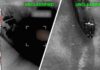
Hayabusa2 successfully captured images of Torifune before and during the flyby, confirming the asteroid’s path and appearance. Mission updates had warned that Torifune would look like a single pixel until about one minute before closest approach, when its true shape would finally come into view. Those images are now starting to reach the public, and early social media posts already show a lumpy, two-lobed body that invites jokes and simple labels.
Link to JAXA/ISAS press conference on yesterday's Hayabusa2's flyby of asteroid Torifune (in Japanese).
They posted images here: https://t.co/kAKLYRw9Pb https://t.co/aGhtrMkzS4— Marcia Smith (@SpcPlcyOnline) July 6, 2026
One outlet described Torifune as “snowman-like,” a catchy phrase that does not appear in any official Japan Aerospace Exploration Agency statements or mission papers. Scientists worry that such language can mislead the public, making serious work sound like a cartoon and distracting from the purpose of the mission. The risk is familiar: people focus on the meme while missing the lesson about real threats from near-Earth objects and the slow, careful work needed to guard against them.
Why this quiet success matters to skeptical citizens
Many Americans, on both the left and the right, feel the federal government has lost track of its basic job: protecting people’s lives and futures instead of protecting political careers. A mission like Hayabusa2’s flyby of Torifune offers a rare counterexample. Here, scientists and engineers spend years on a project that will never trend for long but could someday help save millions of lives in a crisis. It is quiet defense work, built on math and planning instead of slogans.
There is a lesson in how Japan structured this mission. The team reused an existing spacecraft, carefully mapped out risks, and targeted a practical test of trajectory control rather than chasing flashy headlines or vague promises. That stands in sharp contrast to the way many Washington programs grow bloated and unfocused while both parties trade blame. For citizens who believe a “deep state” of insiders protects its own comfort first, a lean, focused mission like Torifune shows how public institutions can still serve real people when they are held to clear goals and honest results.
Sources:
insiderpaper.com, x.com, hou.usra.edu, arxiv.org, space.com, youtube.com, isas.jaxa.jp
© libertystartribune.com 2026. All rights reserved.