
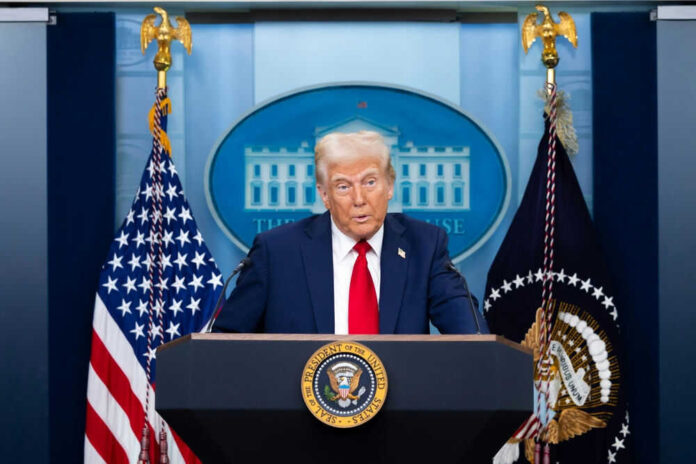
(LibertyStarTribune) – Trump’s latest push for a federal takeover of AI regulation threatens to strip states of their rights and hand unprecedented power to Washington, igniting fierce debate over America’s future direction.
Story Highlights
- Trump calls on Congress to block states from making their own AI rules, demanding a single federal standard.
- GOP leaders seek to attach this ban to the must-pass National Defense Authorization Act.
- Democrats and state leaders object, warning about lost local protections and government overreach.
- Tech industry backs federal preemption to avoid a patchwork of costly state laws.
Trump’s Federal AI Plan: A Fight for State Rights and National Security
President Trump is demanding Congress pass legislation that would block individual states from creating their own regulations on artificial intelligence, insisting that only a single federal standard can keep America competitive, especially against China. This move comes after a year of failed attempts to pass a moratorium on state AI laws and reflects a growing divide between those who want to protect state sovereignty and those who believe only Washington can handle new technologies. Trump has made clear he wants to attach the ban to the National Defense Authorization Act or see it passed as a standalone bill.
For decades, the United States has allowed states to chart their own path on emerging technologies, leading to a patchwork of privacy and consumer protection laws. In 2025, as federal lawmakers failed to act, all 50 states and several territories introduced their own AI-related bills, often in response to concerns about algorithmic bias, child safety, and transparency. As a result, tech companies now face a confusing maze of state laws, prompting industry leaders and lobbyists to push Congress for a single, nationwide rulebook. Trump and GOP leaders argue that this is the only way to stop China from overtaking America in the AI race.
Congressional Showdown: Federal Power Versus State Autonomy
The debate has become a flashpoint for the classic American struggle over federal versus state control. Congressional Republicans, aligned with Trump, are pressing to pass the federal preemption measure, either through the NDAA or as its own law. Democrats and many state officials, however, argue that taking power from the states would eliminate vital local protections and open the door to unchecked government and industry influence. Senator Brian Schatz (D-HI) called the proposal a “poison pill,” vowing to block it. Their concerns center on issues like child safety, copyright, and the broader principle that states are better positioned to protect their own citizens from the excesses of Washington or Big Tech.
No consensus has been reached. A House bill proposing a ten-year ban on state AI laws was watered down to five years but still failed in the Senate. In July, the Senate stripped the moratorium from the budget bill after bipartisan objections, and as of November 2025, the issue remains unresolved. Trump’s public appeals on social media have kept the controversy in the spotlight, exposing deep divisions over who should govern the tools shaping America’s future.
Economic Stakes and Constitutional Concerns
The tech industry, wary of regulatory chaos, has thrown its weight behind Trump’s call for a single federal standard, claiming that compliance with 50 sets of rules would stifle innovation and hurt U.S. competitiveness. Many experts, though, warn that letting Washington override the states risks eroding the constitutional balance of power and undermines the American tradition of local control. Legal scholars note that preempting state authority, especially without a detailed federal framework, sets a troubling precedent, inviting government overreach and weakening the unique protections states have historically provided.
For conservatives, the stakes are clear: surrendering state rights to Washington’s bureaucracy could mean more government control, less accountability, and the loss of hard-fought freedoms. The fight over AI regulation is about much more than technology, it’s a struggle over who gets to decide how Americans live and work. As the federal government seeks to expand its reach, patriots are right to demand transparency, constitutional safeguards, and respect for the values that built this nation.
Industry and Expert Views: Competing Visions for America’s Future
Many leading technology CEOs and industry groups insist a single federal law is the only way to avoid costly and confusing compliance problems, especially as AI systems rapidly evolve. They argue that national security, economic growth, and America’s leadership in technology depend on swift, unified action. On the other side, policy experts and advocates for state autonomy urge caution, warning that one-size-fits-all rules rarely protect local communities and can silence innovative solutions to emerging threats. The lack of a clear federal framework for AI only deepens these worries, fueling skepticism about whether Washington can or should be trusted with such sweeping authority.
This fight is far from over. As Trump doubles down on his demand for federal action, and as Congress wrestles with the balance of power, Americans are left to wonder: Will Washington respect the Constitution and state sovereignty, or will a new era of government overreach take hold under the guise of technological progress?
Copyright 2025, Libertystartribune.com