(LibertystarTribune.com) – Iran’s unprecedented missile-and-drone barrage across every Gulf state may have just triggered the regional “line in the sand” that finally ends years of cautious half-measures.
Story Snapshot
- Iran launched a broad retaliatory strike package on March 1, hitting or targeting multiple Gulf countries, Israel, and U.S. positions after U.S.-Israeli strikes the day prior.
- For the first time, every GCC state faced the same attacker within 24 hours, a shock that is pushing Gulf capitals toward considering direct counter-attacks.
- Gulf air defenses reportedly intercepted large volumes of ballistic missiles and drones, but some weapons still penetrated and caused material damage.
- Oman’s mediation track appeared to collapse as its foreign minister voiced dismay after last-ditch diplomacy failed hours before the strikes.
Iran’s Regional Attack Wave Forces a New GCC Calculation
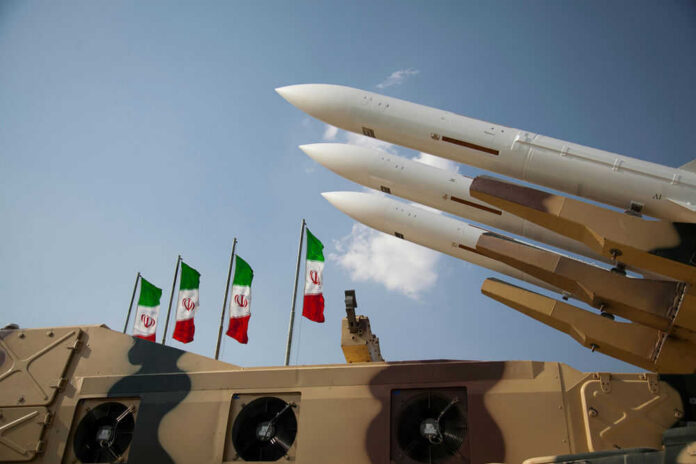
Iran’s March 1 retaliation marked a historic escalation because it expanded beyond the usual proxy chessboard and struck across the Gulf in a synchronized wave. Reports describe missiles and drones launched toward the UAE, Saudi Arabia, Qatar, Kuwait, Bahrain, Jordan, Israel, and U.S. facilities, setting off intercepts and civil-defense measures across the region. Analysts highlighted the significance: Gulf governments were not just “supporting” a coalition—they were suddenly defending their own skies.
The Gulf Cooperation Council has long relied on U.S. security guarantees while trying to avoid direct state-on-state war with Tehran. That posture becomes harder to maintain when civilian infrastructure is damaged and national air defenses are consumed at scale. The research indicates Gulf states activated broad “all-of-government” readiness steps, including shelter-in-place alerts, school closures, hardened infrastructure, and alternate command-and-control arrangements—signals that leaders are preparing their publics for a prolonged crisis rather than a one-night exchange.
Air Defense Numbers Show Both Capability and Vulnerability
Regional air-defense performance—especially in the UAE—showed formidable capacity, with reported interceptions including 165 ballistic missiles, two cruise missiles, and 541 drones. Kuwait reportedly intercepted 97 ballistic missiles and 283 drones, while Bahrain downed 45 missiles and nine drones even as the U.S. 5th Fleet headquarters was reported partially hit. Qatar reported intercepting 18 inbound threats, and Jordan also reported interceptions of ballistic missiles and drones.
Those figures matter for two reasons. First, they demonstrate that U.S.-partnered integrated air and missile defense networks can blunt massive salvos, protecting populations and critical infrastructure. Second, the same reports acknowledge penetrations—such as dozens of drones getting through in the UAE and causing material damage—underscoring that “defense only” has limits. When adversaries can fire hundreds of weapons, even a high interception rate can still leave enough leakers to hit runways, ports, and energy assets.
From Defensive Posture to Deterrence: Why Counter-Attacks Are Now on the Table
Analyst commentary in the research argues that Gulf states may conclude they must restore deterrence rather than simply absorb attacks while burning through interceptor stocks. The UAE and Saudi Arabia are highlighted as the key countries to watch if Iran’s strikes continue, because both have strategic infrastructure and the capabilities to contribute meaningfully to a coalition response. At the same time, the available reporting does not confirm specific operational plans, timelines, or target sets for any GCC counter-offensive.
For American audiences, this is a reminder that deterrence is not a slogan—it is a cost-imposition strategy. If Tehran’s calculus is that it can punish neighbors broadly without paying a direct price, the region shifts toward chronic instability. If Gulf states decide that defending alone invites repeat attacks, the conflict could widen from a U.S.-Iran confrontation into a multi-state war posture. The research also flags a major uncertainty: civilian casualty totals are not comprehensively documented in the cited reporting.
Diplomacy Collides With Reality as the War Footprint Expands
Oman’s role as a mediator took a visible hit when its foreign minister said he was “dismayed” by the joint operation, which reportedly occurred only hours after he met with Vice President JD Vance during a final attempt at diplomacy. That detail is important because it shows how quickly talk tracks can be overtaken by events once large-scale strikes begin. With missile salvos flying, even well-positioned intermediaries can lose leverage in real time.
What comes next hinges on whether Iran continues regional strikes and whether Gulf states shift from interception to retaliation. The reporting also emphasizes strategic geography: U.S. infrastructure in the region, including major basing and naval headquarters, sits close to the fight, while the Strait of Hormuz remains a global energy choke point. Limited confirmed detail exists on Iran’s total weapons fired, but the documented scale is enough to force hard decisions in every Gulf capital.
Sources:
https://www.politico.com/news/2026/02/28/us-gulf-iran-allies-gcc-arab-00805858
https://en.wikipedia.org/wiki/2026_Iran%E2%80%93United_States_crisis
https://breakingdefense.com/2026/03/iran-attacks-uae-saudi-missiles-drones-gcc-air-defense/
https://www.cfr.org/articles/gauging-the-impact-of-massive-u-s-israeli-strikes-on-iran
https://understandingwar.org/research/middle-east/iran-update-morning-special-report-march-1-2026/
Copyright 2026, LibertystarTribune.com