(LibertystarTribune.com) – The misleading narrative of a U.S. military blockade against Venezuela continues to blur the lines between sanctions and acts of war, causing confusion among global observers.
Story Highlights
- No evidence supports claims of a U.S. military blockade against Venezuela.
- U.S. actions consist of economic sanctions, not naval blockades.
- Venezuelan officials use the term “blockade” to describe sanctions rhetorically.
- Sanctions aim to address human rights abuses and corruption without military intervention.
Sanctions vs. Blockades: Understanding the Difference
The notion of a U.S. military blockade against Venezuela is not supported by verifiable evidence. Instead, the U.S. has imposed economic sanctions, beginning with the Obama administration in 2015 and expanding under Trump in 2017. These sanctions target human rights abusers and corrupt officials and are financial in nature, without military enforcement or naval interdiction.
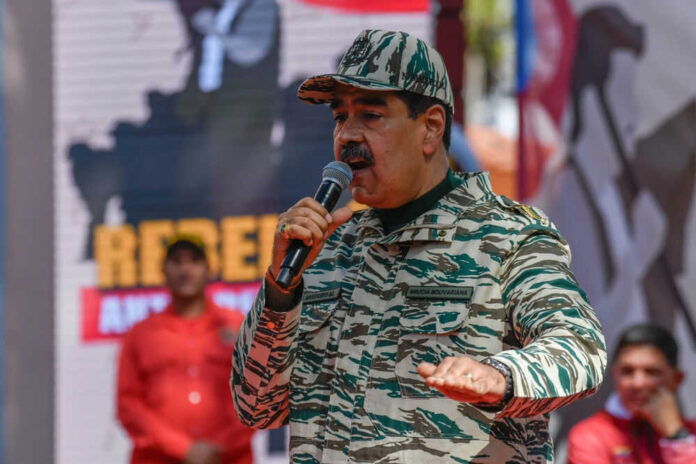
Venezuelan President Nicolás Maduro has described these sanctions as an “illegal blockade,” a term which blurs the distinction between economic measures and military actions. This rhetoric serves Maduro’s narrative by positioning the U.S. as an aggressor while deflecting from domestic issues such as corruption and economic mismanagement.
The Historical Context of U.S.-Venezuela Relations
The tensions between the U.S. and Venezuela have their roots in the 1999 Bolivarian Revolution under Hugo Chávez, escalating under Maduro due to democratic backsliding. The U.S. initially imposed sanctions in response to human rights abuses during the 2014 protests. The sanctions were later expanded to cover financial markets and the state oil company PDVSA, particularly after the questionable 2018 presidential election.
The 2019 presidential crisis, where the U.S. recognized Juan Guaidó as interim president, further strained relations. Recent sanctions have been re-imposed following Maduro’s 2024 re-election, which was marred by fraud allegations. These sanctions, however, are crafted with humanitarian carve-outs to minimize harm to the Venezuelan population.
Current Developments and Impacts
Despite ongoing claims of a military blockade, the focus remains on sanctions targeting specific sectors like finance and oil. These sanctions have significantly impacted Venezuela’s economy, restricting oil revenues and exacerbating humanitarian issues. However, they are designed to pressure the Maduro regime without resorting to military intervention.
The sanctions have also led to increased repression within Venezuela and have contributed to the country’s refugee crisis. Critics argue that while the sanctions target regime elites, they also inadvertently affect the broader population by limiting imports and public spending.
Sources:
Sanctions during the Venezuelan crisis
United States sanctions during the Venezuelan crisis
US-Venezuela timeline: From sanctions to military action
Here is a timeline of US escalating actions before Maduro’s capture in Venezuela
Copyright 2026, LibertystarTribune.com